The claimed Tamil custom of choosing one’s spouse
Ponniyin SelvanThe claimed Tamil custom of choosing one’s spouse is a principle Pazhuvoor Ilaiya Rani invokes to define marriage as a woman’s choice rather than a consequence of being compelled into a union. Her account gives the custom a double force: it makes her marriage to Pazhuvettarayar an injustice, and it frames the revenge she seeks as a response to that injustice.
The custom as she describes it
Pazhuvoor Ilaiya Rani presents generations of her ancestors as having loved and married the men they chose. In her account, their example is not merely a preference but a defining tenet of Tamil womanhood: women did not submit to the indignities of forced marriage. The rule is therefore expressed through both positive choice and refusal—the right to choose a spouse, and the rejection of a union imposed against one’s will.
Her marriage as a contradiction
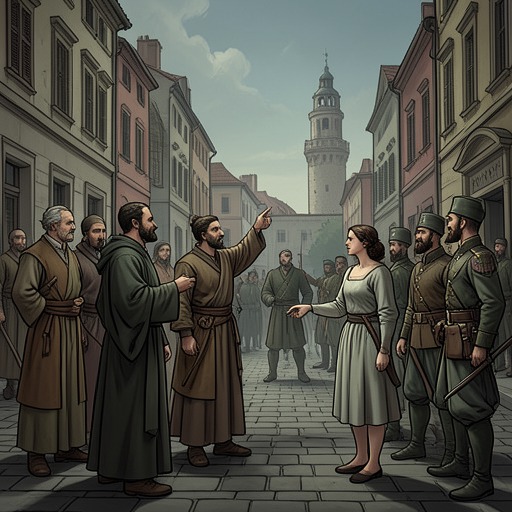
Speaking with Vallavarayan Vandhiyathevan, Pazhuvoor Ilaiya Rani rejects the description of herself as Pazhuvettarayar’s wife. She argues that being dragged against her will and confined in a palace does not make her his consort. The contrast gives the custom immediate personal stakes: the accepted title and outward arrangement of marriage cannot, in her telling, erase the absence of consent.
Submission and revenge
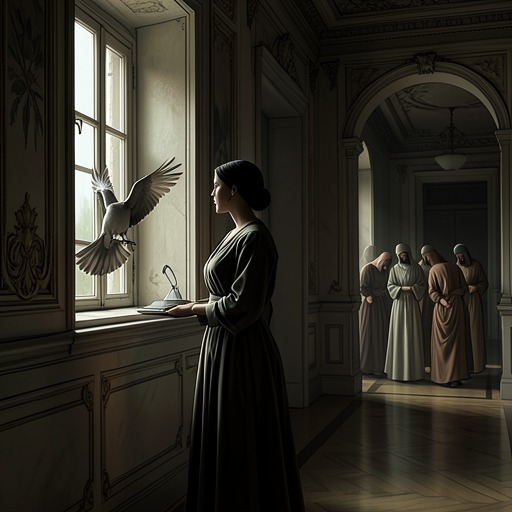
Pazhuvoor Ilaiya Rani anticipates the question of why she submitted to Pazhuvettarayar’s tyranny despite the ancestral tradition she has just invoked. She answers that she had an important motive, then identifies vengeance for the terrible injustices inflicted on her as a defining feature of the women of ancient Tamilagam. She asks Vallavarayan Vandhiyathevan to help exact revenge, linking her account of marriage choice to a larger appeal for action. The passage presents the custom as her stated moral framework; it does not independently establish how widely or consistently the practice was observed.